 |
|
 |
Get our FREE |
|
|
|
|
Get our FREE |
    |








In freight transport, a single mechanical detail can make the difference between a safe trip and costly downtime. According to the Commercial Vehicle Safety Alliance (CVSA), more than 50% of out-of-service orders during inspections are related to brake and tire failures. That’s why having a preventive service program should not be seen only as emergency support, but as a key strategy to reduce risks, fines, and expenses.
1. Tire pressure and tread checks
In Califo
ia, CVC 27465 sets minimum legal tread depths: 4/32” for steering tires and 2/32” for others. Beyond compliance, keeping proper inflation and detecting irregular wear helps prevent blowouts. Specialists at Truck Stop Tire Service also inspect alignment and balance—factors often overlooked by drivers but which directly impact safety and fuel efficiency.
2. Brake inspections at every stop
During Brake Safety Week 2024, 12.8% of inspected trucks were taken out of service due to brake failures. The recommendation is clear: use every stop as an opportunity to check drums, rotors, and air lines. With mobile service units, Truck Stop Tire Service performs these inspections on the road, reducing the risk of violations, accidents, and downtime.
3. Tire rotation and pairing
For high-mileage fleets, rotating tires every 8,000 to 10,000 km extends their lifespan and lowers costs. Properly pairing tires on dual axles avoids uneven stress that damages suspension and increases fuel consumption. This procedure is included in the mobile maintenance programs offered by Truck Stop Tire Service.
4. Roadside response plan
A blowout on the highway doesn’t just delay cargo—it also puts the driver at personal risk. Having a 24/7 emergency response service ensures immediate assistance, quick replacements, and less time off the road. It also helps operators comply with Hours-of-Service regulations without unnecessary delays.
Conclusion
A comprehensive tire and brake service program should never be considered an emergency expense, but rather an essential investment in safety and efficiency. For owner-operators, it means protecting their most valuable asset—the truck. For large fleets, it helps minimize downtime, avoid fines, and strengthen reliability.
With the experience of Truck Stop Tire Service, drivers in Califo
ia can anticipate problems, keep their units safe, and ensure that every mile on the road is a productive mile.
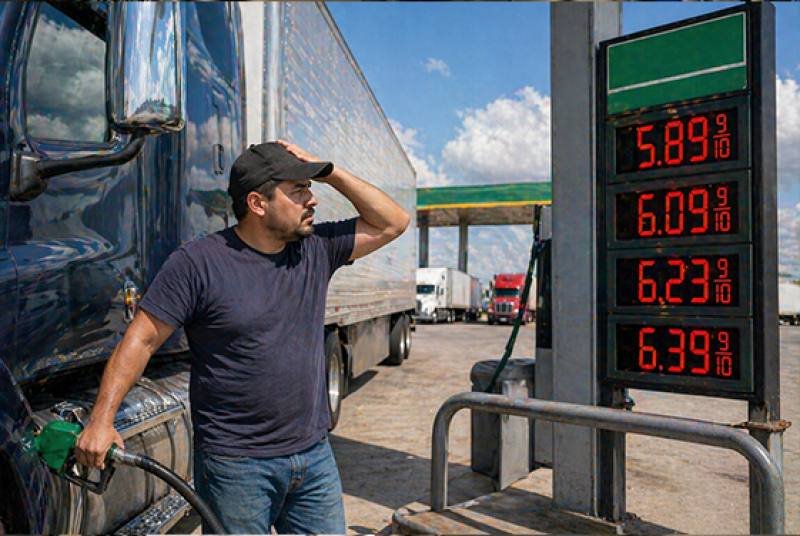
When diesel prices tighten their grip, any news of a “price break” sounds like a lifeline. But the reality o...
read more...
A law enforcement operation in Southe Califo ia exposed what many truck drivers have long suspected: cargo theft is mor...
read more...
The road never stops—and neither do the people who drive it. Truck drivers are the invisible engine of the U.S. ec...
read more...
If it feels like you’re getting pulled over more often on the road, it’s not your imagination. Inspections b...
read more...