 |
|
 |
Get our FREE |
|
|
|
|
Get our FREE |
    |











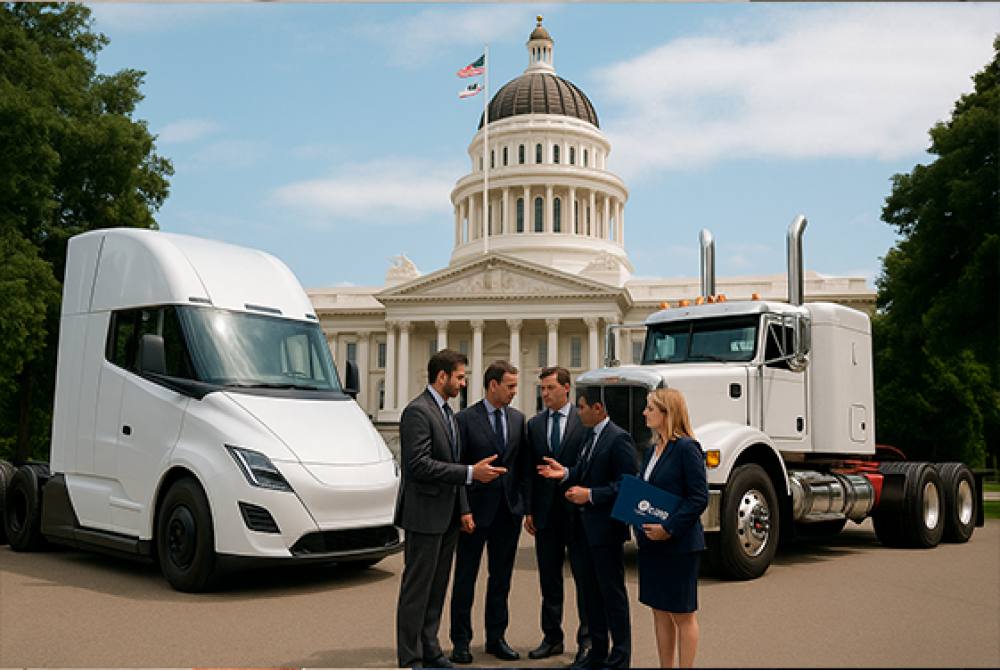
The future of trucking in the United States is under dispute. Major manufacturers —Daimler, Inte
ational, Paccar, and Volvo— have filed a lawsuit against the Califo
ia Air Resources Board (CARB) and Gove
or Gavin Newsom. At the center of the conflict is the Clean Truck Partnership, an agreement signed in 2023 that obligates compliance with Califo
ia’s strict emissions standards, even though those rules have been challenged at the federal level.
The pact included commitments such as the Low NOx Omnibus Rule, Advanced Clean Fleets programs, and the gradual transition to zero-emission trucks. In retu
, Califo
ia promised regulatory stability and support for charging and hydrogen infrastructure. Manufacturers also agreed not to challenge the state’s emissions rules in Califo
ia or other jurisdictions.
The situation changed in June, when the Trump administration nullified Califo
ia’s truck emission standards. In response, Newsom issued an executive order reaffirming the pact, wa
ing that companies refusing to comply would lose access to state incentives and contracts.
Manufacturers argue they are caught in a “crossfire”: Califo
ia enforces rules the federal gove
ment has invalidated, while the Department of Justice has directed them to ignore those requirements. On August 15, the federal gove
ment moved to intervene in the case, arguing that CARB is using the Clean Truck Partnership as a “backdoor regulation” to impose standards Congress already struck down.
The companies also accuse CARB of failing to meet its commitments, such as allowing reasonable delivery timelines and coordinating sufficient infrastructure for the technological transition. What was meant to be a framework of cooperation, they claim, has tu
ed into a regulatory tool.
Meanwhile, the regulatory uncertainty is affecting production planning for 2026 models, adding pressure to the entire industry. For truckers and fleet owners, the outcome of this lawsuit could mean higher truck prices, fewer incentives, and unclear deadlines to adapt to cleaner technologies.
A key debate for the trucking industry
This case highlights the ongoing tension between state authority and federal power over environmental policy and energy transition. The court’s decision will be critical: it will determine whether Califo
ia can uphold its own emissions standards or whether federal authority will prevail.
Beyond the legal battle, the stakes are high for the future of mobility. The trucking industry must strike a balance between competitiveness, operating costs, and the growing pressure to move toward cleaner, more sustainable freight transportation across U.S. highways.
When diesel prices tighten their grip, any news of a “price break” sounds like a lifeline. But the reality o...
read more...
A law enforcement operation in Southe Califo ia exposed what many truck drivers have long suspected: cargo theft is mor...
read more...
The road never stops—and neither do the people who drive it. Truck drivers are the invisible engine of the U.S. ec...
read more...
If it feels like you’re getting pulled over more often on the road, it’s not your imagination. Inspections b...
read more...